
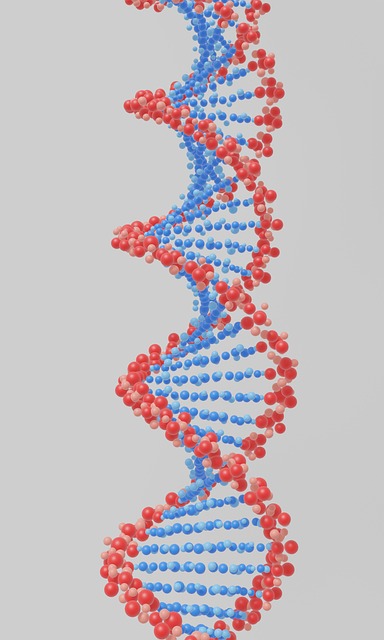
OpenAI has put a scientist's name on a model for the first time, and it is a pointed choice. GPT-Rosalind, launched on 16 April, is named for Rosalind Franklin — the British chemist whose X-ray crystallography helped reveal the structure of DNA — and it is built to do the unglamorous middle stretch of biological research that swallows years of a working scientist's life.
That is the news. The shift behind it is more interesting.
What it actually does
GPT-Rosalind is a frontier reasoning model fine-tuned for biology, drug discovery and translational medicine. According to OpenAI's own announcement, it is designed to handle the multi-step grind of modern lab work: literature review, hypothesis generation, experimental planning, sequence-to-function interpretation and data analysis.
It can query specialised databases, parse recent papers and call computational tools through a new Life Sciences research plugin for Codex, which connects to more than 50 public multi-omics databases and biology tools. The pitch is not a faster chatbot — it is a research assistant that can sit inside a workflow and stay there.
OpenAI says it takes 10 to 15 years to move a drug from target discovery to regulatory approval in the United States, and that gains made early in that pipeline compound downstream. GPT-Rosalind is aimed at compressing those early stages.
Not AlphaFold, and that's the point
It is tempting to file this alongside DeepMind's AlphaFold, the protein-structure predictor that has already reshaped structural biology. The comparison is misleading.
AlphaFold is brilliant at one thing. GPT-Rosalind is positioned as a general-purpose research assistant for the life sciences — a model that can reason across chemistry, protein engineering, genomics and clinical evidence in the same session, and orchestrate tools rather than replace them.
In other words: AlphaFold is a specialist instrument. GPT-Rosalind is a generalist colleague who happens to have read the literature.
The benchmark numbers
OpenAI has published evaluation figures, all from its own testing. On BixBench, a bioinformatics benchmark, the model scored a 0.751 pass rate. On LABBench2 it outperformed GPT-5.4 on six of eleven tasks, with the largest jump on CloningQA, which requires end-to-end design of reagents for molecular cloning.
In a partnership with Dyno Therapeutics, the model was tested on RNA sequence-to-function tasks using unpublished sequences — useful, because it ruled out training-data contamination. Best-of-ten submissions ranked above the 95th percentile of human experts on prediction and around the 84th percentile on sequence generation.
These are vendor-published numbers. Independent replication will matter.
The vertical turn
The strategic signal is louder than any single benchmark. For three years the frontier race has been measured almost entirely on general intelligence: longer context windows, better coding, broader reasoning. GPT-Rosalind is OpenAI conceding that the next gains may come from going narrow rather than wide.
Rivals are already moving the same way. Google has poured resources into Gemini-derived science tooling and Anthropic has been releasing domain connectors. The question is no longer only "whose general model is best" but "whose specialised model owns which scientific field".
The Franklin question
The naming is not incidental. Labs have so far given their models bland alphanumerics or cute internal codenames. Putting Rosalind Franklin's name on a product is a cultural move — a claim of seriousness, and a nod to a scientist who was, for decades, written out of the DNA story.
Whether GPT-Rosalind earns the name will depend on what working biologists do with it once they get access. Launch is via a trusted-access programme for qualified US enterprise customers, with Amgen, Moderna, the Allen Institute and Thermo Fisher Scientific among the early partners.
For now, it is a careful, deliberate signal: frontier AI is starting to specialise, and biology is where it is staking the first flag.