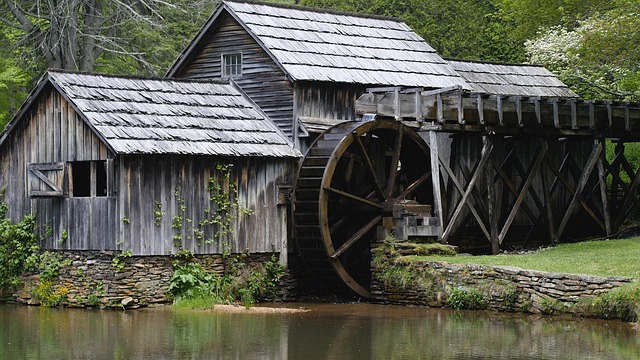
For the first time in thirty years, the great waterwheel at Preston Mill is doing precisely what it was built to do. It is grinding grain.
On the banks of the River Tyne in East Linton, the 18th-century mill — a building so picturesque that the producers of Outlander could scarcely believe their luck — has emerged from a long mechanical slumber, its restored French Burr millstones turning once more in time for National Mills Weekend on 9 and 10 May.
The tale of how a sleepy East Lothian landmark came back to life owes a great deal to a television drama. Viewers of Outlander's first season will recall the scene in which Jamie Fraser, played with considerable brio by the Scottish actor Sam Heughan, wades into the Tyne to mend the waterwheel. That single sequence transformed a quiet National Trust for Scotland property into an object of pilgrimage — and the fans who arrived in its wake did rather more than simply admire the view. They opened their wallets.
According to the National Trust for Scotland, an unnamed generous donor
provided the initial funds that made the wider restoration possible. The Trust has politely declined to disclose either the identity of this benefactor or the sum involved. Outlander enthusiasts subsequently chipped in with further donations to pay for repairs.
The work itself was no small undertaking. Fraser MacDonald, a visitor services supervisor at Preston Mill, explained that the heart of the problem lay in a pair of stones that had been quietly defeating the millers since the 1990s.
The millstones are made from French Burr, a type of freshwater quartz that is highly prized for milling,
he said. Our stones had been separated since the 1990s and were worn completely flat, but the dressing restoration has allowed them to be put back together for milling once again.
Visitors to the mill in recent years had been able to watch the wheel turn, but the actual business of grinding flour had been impossible. Now, with the stones dressed and reunited, the whole apparatus can finally do its work.
Preston Mill is no Johnny-come-lately. The earliest record of repairs at the site dates to 1598, and the Trust believes that some manner of mill may have stood there since the 13th century. The present waterwheel — the very one immortalised by Mr Heughan's exertions — was installed in 1909. The mill passed into the care of the National Trust for Scotland in 1950 and continued in commercial operation until 1959, when the modern world finally caught up with it.
Stuart Maxwell, a regional director at the National Trust for Scotland, was in a reflective mood when asked about the significance of the project.
Mills like Preston Mill were central to their communities and help tell the story of rural life in East Lothian from the 18th to early 20th centuries,
he said. With continued investment, these places can keep telling their stories for centuries to come. We hope that visitors will enjoy seeing real milling demonstrations again for the first time in decades and continue to support our vital conservation work.
Those demonstrations will form the centrepiece of Preston Mill's contribution to National Mills Weekend on 9 and 10 May, when visitors can watch grain ground in the proper, unhurried fashion — flour produced as it has been for centuries, in a building that owes its second wind to the unlikely combination of an anonymous patron, a Scottish television heart-throb, and a small army of devoted admirers from rather further afield.
A heritage win, then. And a thoroughly handsome one.