
In a quiet corner of the East End, three weavers lie in ground most Glaswegians have never visited. They were shot dead in 1787 by troops sent to break a strike over wages and working conditions. They were Scotland's first working-class martyrs. And until very recently, the city they helped to shape had all but forgotten them.
That neglect is what a new song, freshly premiered in Glasgow, hopes to put right.
The Broken Stones of the Calton Weavers, by the academic-musical collective The Tenementals, has just been given its first public airing at The Great May Day Cabaret on 4 May, where the band headlined International Workers' Day celebrations in the city. An earlier outing came on 21 April at the Scottish Trades Union Congress President's Dinner — a fitting first audience, given that the Weavers' story is, in essence, the story of how working people first learned to organise.
The strike that shook Glasgow
The song takes its inspiration from one of the darker chapters of Glasgow's industrial past. In 1787, troops of the 39th (East Middlesex) Regiment of Foot were dispatched to crush a strike by the cotton weavers of the Calton. As tempers flared at Drygate Brig — now the site of the Drygate and Tennent Caledonian breweries — the soldiers loosed a volley of musket fire. Three men died on the spot. Three more succumbed in hospital. Their courage rippled outward through the weaving towns of the west of Scotland and is credited by historians as helping to lay the path to the Scottish Insurrection of 1820.
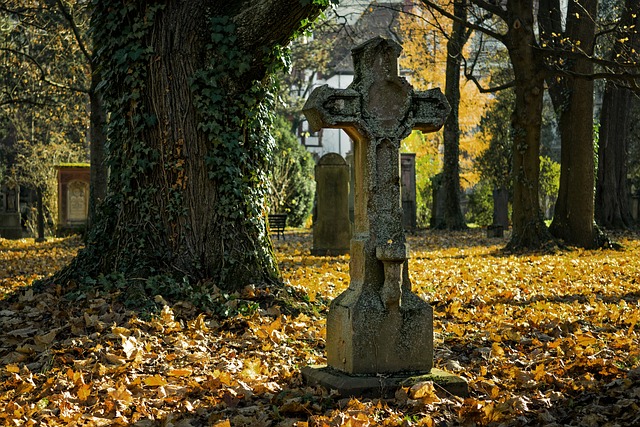
Three of the dead lie in the Calton Burial Ground. Until 2023, when the Calton Weavers Commemoration Committee was formed to restore their memorials, their resting place had been allowed to slip into a state which the committee's Jim Lister bluntly calls "a disgrace to the memory of Glasgow's first working class martyrs".
A band on a mission
The Tenementals — led by Professor David Archibald of the University of Glasgow — have made it their business to put right such forgetting. Their 2024 debut, Glasgow A History (Vol. I of VI), drew warm reviews at home and abroad for the audacious project of reimagining the city's radical past as a living rock soundtrack.
"Glasgow likes to think of itself as a people's city, a radical city," Professor Archibald said, "and yet these men whose actions were key in forging the modern labour movement are largely ignored. We want to help rectify that."
The song weaves into its lyrics the very words carved on the weavers' memorial:
We'll never swerve
we'll steadfast be
we'll have our rights
we will be free.
It also poses a question that has clearly haunted its writer: "Who is remembered? Who is forgotten?"
The line-up that performs it is a small orchestra in itself — drums, keys, bass, cello, saxophone, cornet, three voices and a brace of guitars — the kind of generous, full-throated arrangement that befits a song determined to be heard.
"Music allows history to be encountered emotionally and intellectually," Professor Archibald said. "We want people to have a good time while also grappling with difficult histories — to dance to the beat of Glasgow's radical past."
A legacy in stone
There is a practical legacy as well as a musical one. Proceeds from the May Day premiere will go towards interpretive signage at the Calton Burial Ground, so that visitors who chance upon the place finally know whose stones they are standing among. The Commemoration Committee will host the song on its website as a way in for newcomers, and an accompanying music video is in development.
The track will also feature on The Tenementals' second album, supported by Creative Scotland and due on Strength in Numbers Records in February 2027.
For Mr Lister, the project speaks to something larger than music. "This is about radical futures as much as radical pasts," he said. "The Weavers' story reminds us that history is something we inherit but also something we are responsible for carrying forward."
It is a fine thing, in an age allergic to memory, to find a Glasgow band reaching back nearly 240 years to dust off the names of six men and set them, at last, to music.