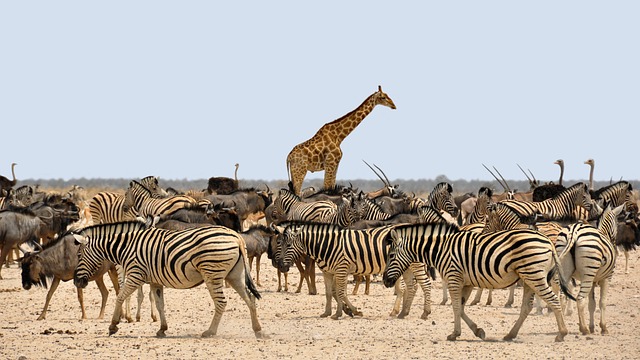
She is small, stripy and slightly accident-prone. He is two and a half thousand pounds of quiet, long-necked kindness. And somewhere between the hay bales and the afternoon sun at a theme park in Georgia, they have decided they are family.
Meet Kurtsie, a zebra, and Bakari, a giraffe — the inseparable duo at Wild Adventures Theme Park in Valdosta, whose cross-species friendship was first reported by the New York Post this month and has since cantered its way around the internet.
The pair live in the park's Giraffe Overlook, a habitat designed to let several species mingle much as they would on the savannah. Park staff told the Post that Bakari, who tips the scales at around 2,500lb, showed a "gentle curiosity" toward the zebra herd from the moment it arrived. Kurtsie, born in December 2023, was the one who caught his eye.
A small zebra, a very large friend
The backstory, as told to the Valdosta Daily Times and the Charlotte Observer by animal care specialist Sarah Plain, is sweeter — and a little sadder — than the viral clips suggest. Kurtsie, it turns out, was being picked on by the other zebras. Staying close to Bakari's towering legs kept the bullying at bay. Even once her own herd came round, she had made her choice.
"In habitats like this, animals can form relationships naturally," Plain said, "and Kurtsie has chosen Bakari as her special herd."
What that looks like day to day is almost unbearably charming. They lounge together. They groom each other. They share snacks. Kurtsie trots along to Bakari's feedings just to watch him eat, occasionally weaving between his legs for a nudge of attention. Giraffes only lie down when they feel safe, Plain noted — and these two are often found dozing side by side in the grass.
So what does the science say?
Plenty, as it happens. A 2017 review from the Swedish University of Agricultural Sciences defined interspecies friendship as a "sustainable, altruistic or reciprocal" bond between animals of different species, marked by play, proximity and social behaviour that is neither aggressive nor reproductive. In other words: hanging out, on purpose, because it feels good.
Behavioural researchers writing for Live Science point out that many social animals form preferences — they have best mates, not just herd-mates — and that shared environments, early exposure and individual temperament all play a part. Bakari, by all accounts, is an unusually sociable giraffe. Kurtsie needed a friend. The habitat did the rest.
The effect has been mutual, Plain said. Kurtsie has grown calmer and more confident, taking behavioural cues from her serene companion. Bakari, for his part, has become more playful and protective. "It shows how aware and responsive these animals are to each other," she said.
Why it matters beyond the feed
Stories like this travel because they poke at something we suspect but rarely see proven: that animals are not emotional blank slates. And there is a quieter conservation point folded in. Mixed-species habitats — the kind that let a young zebra wander under a giraffe's legs in the first place — are increasingly how modern parks and reserves are designed, precisely because they encourage the natural behaviours that visitors, and scientists, learn most from.
Wild Adventures, which celebrated its 30th anniversary on 14 March, says guests can spot the pair from the Giraffe Overlook or the park's Safari Train.
No grand lesson required. Just a very tall friend, a very small friend, and the reminder that the best company sometimes arrives in an unexpected shape.