For twelve hours, Albert the sheep refused to come out of his shelter.
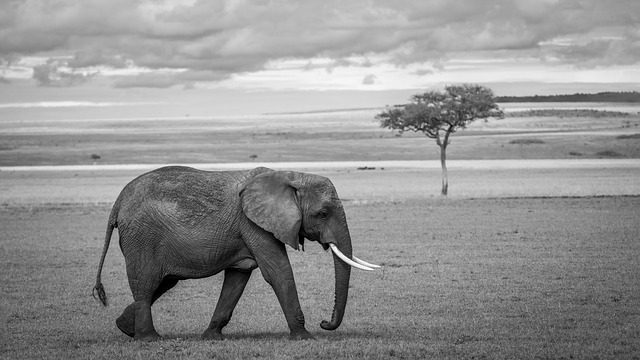
He had good reason. The creature that had just bowled into his enclosure at the Shamwari Wildlife Rehabilitation Centre, in South Africa's Eastern Cape, was a six-month-old elephant named Themba — orphaned that week after his mother fell from a cliff, rejected by his herd, and by all accounts desperate for something, anything, to love.
Themba had chosen Albert. Albert, understandably, had concerns.
A very patient sheep
The staff at Shamwari had paired the two in hope rather than confidence. Orphaned elephants are notoriously difficult to keep alive — they grieve, they stop eating, they fade. A woolly companion was, by the sanctuary's own admission, a long shot.
For half a day, it looked like a failed one. Then, quietly, Albert emerged.
What happened next has since been documented in a Daily Mail feature, an Apple TV film called Wild & Woolly: An Elephant and His Sheep, and thousands of social media shares that refuse to die down nearly two decades on. The sheep and the elephant became, in the word used by every observer who has ever tried to describe it, inseparable.
The small, specific moments
It is the details that stick.
They napped pressed against one another, Themba's trunk resting lightly over Albert's back. They walked the perimeter of the enclosure together at dusk, the elephant adjusting his pace so the sheep could keep up. At feeding time, Albert — who had previously given thorny acacia branches a wide berth — watched Themba strip them of their leaves and worked out, by patient imitation, how to eat around the spikes.
Staff reported that Themba, who had arrived listless and refusing to interact, began to perk up within days of Albert's emergence from the shelter. Albert, for his part, lost interest in the other sheep entirely.
What the scientists would (and wouldn't) say
Animal behaviourists are generally careful about calling this sort of thing a friendship. The safer language is “attachment,” “social bonding,” or the slightly bloodless “affiliative behaviour across species.” Elephants, we know, are among the most emotionally sophisticated mammals on the planet: they mourn their dead, comfort distressed calves, and remember individuals for decades. Sheep, rather less celebrated in the emotion department, have nonetheless been shown to recognise faces, form preferences and feel stress when separated from companions.
Put the two together in a moment of mutual need, the theory goes, and the species difference begins to matter less than the shared vocabulary of warmth, presence and being left alone when required.
Which is, not to put too fine a point on it, friendship.
The sanctuary that made it possible
Shamwari's Wildlife Rehabilitation Centre, founded as a registered facility in its current form in 2018 and operating on the reserve for years before that, takes in sick, injured and orphaned wild animals from across the Eastern Cape. Its stated aim is to return every animal to the wild where possible, and to minimise human habituation in the process — a mission that made Albert's role all the more valuable. A sheep, unlike a keeper, leaves no fingerprints on an elephant's instincts.
The centre relies heavily on donations. Readers moved by Themba and Albert's story can support the ongoing work via the Shamwari Foundation's page on GlobalGiving, or through the reserve's own conservation portal at shamwari.com.
Albert, the twelve-hour holdout, would probably approve. Eventually.