Douglas Carnegie describes himself as a "lamer." In the Amiga scene, the term refers to someone who uses and admires the machines rather than creating software for them. "I couldn't make music, crack copy protection, create mesmerising graphics routines, games or utilities," he says, "but I could ooh and aah plenty, and still do, when the fruits of these wizards' labours made their way into our hands."
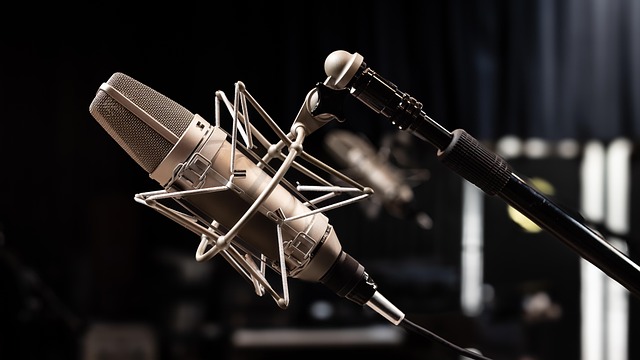
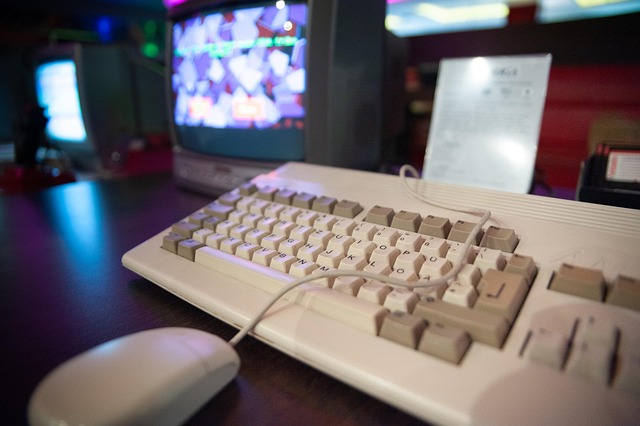
It is, as self-deprecation goes, rather misleading. Carnegie's current setup — a modified Commodore Amiga 600 running a 25MHz 68030 processor, 32MB of fast RAM, an FPGA video scandoubler, and CompactFlash storage, serving as the MIDI nerve centre of a recording studio synced to an eight-track digital tape recorder — suggests someone who has got rather more of a hold on this forty-year-old platform than he lets on.
And that phrase — getting a hold of it — turns out to be the key to understanding why, in 2026, the Commodore Amiga is not merely surviving but actively thriving.
A Machine From the Future
When Commodore launched the original Amiga 1000 on 23 July 1985, the world was not quite ready for it. The machine boasted a custom chipset — Agnus for memory control, Denise for graphics, Paula for four-channel stereo audio — that together delivered capabilities no competitor could match. Its operating system, AmigaOS, offered genuine pre-emptive multitasking in as little as 256KB of RAM, at a time when both the Macintosh and the IBM PC were resolutely single-tasking.
Dave Haynie, a Commodore engineer, famously observed that there was no such thing as an 1980s computer — only 1970s computers and 1990s computers — and it was the Amiga that dragged the industry from one era into the next.
The machine found its stride with the Amiga 500 in 1987, which became a runaway success in Europe. At its peak between roughly 1987 and 1993, the Amiga was the platform of choice for gaming, desktop video production, tracker-based music, and the burgeoning demoscene. Hollywood took notice: early computer-generated effects for productions including Babylon 5 and SeaQuest DSV were created on Amiga systems. The Video Toaster, a third-party add-on for the Amiga 2000, made broadcast-quality video production affordable for the first time.
Commodore sold approximately five million Amigas worldwide before catastrophic mismanagement and a failure to invest in next-generation hardware led to the company's bankruptcy in 1994. The brand passed through a succession of owners amid legal disputes that persist to this day.
For most observers, that was the end of the story. It was not.
Down the Rabbit Hole
Carnegie's journey mirrors that of countless Amiga enthusiasts. His computing life began with a Sinclair ZX Spectrum 48K, shared with his brother. The first Amiga 500 appeared in his neighbourhood around 1989. "We'd seen the impressive screenshots on 8-bit cassette inlays," he recalls, "but it was genuinely mind-blowing to see, hear and play it."
In 1992, he went to buy an A500 with a nice retail bundle and came away with a launch-price A600HD — £499 in a plain Commodore box, no games included. "A harsh lesson!" By the late 1990s, like most casual users, he had moved on to a Windows 98 PC. "With brute force, it outstripped the Amiga in all dimensions."
Then, around 2005, he stumbled upon an Amiga emulator. "And down a rabbit hole I go."
The rabbit hole is deeper than it sounds. "Before you know it," Carnegie says, "you've got a bookcase full of floppy discs, a cupboard full of obscure peripherals, a stack of motherboards in various states of disrepair and one museum piece early 90s computer, upgraded at great expense to perform like a slightly higher spec early 90s computer, and it's all bloody great fun."
The Ecosystem in 2026
Carnegie's experience is far from unique. According to analysis by GenerationAmiga.com, the worldwide Amiga ecosystem in 2026 encompasses an estimated 500,000 to 800,000 people, including between 120,000 and 200,000 who regularly operate original hardware, 300,000 to 600,000 emulator users, and a growing cohort using FPGA-based recreations. Between 3,000 and 6,000 new FPGA Amiga systems are produced annually, alongside 5,000 to 10,000 accelerator cards and upgrade components.
The community is overwhelmingly European — roughly sixty-five to seventy per cent — reflecting the platform's original stronghold. The largest age group falls between forty and fifty-five, but younger retro-computing enthusiasts are gradually joining.
What keeps the platform alive is not corporate backing but a loose network of dedicated individuals. Carnegie cites the example of one person who single-handedly preserved Bars & Pipes, the MIDI sequencing software he now uses daily, complete with all tools and documentation. Another individual ported the Amiga's software emulator into hardware description language for FPGA implementation, a contribution that ultimately led to the PiStorm — an open-source accelerator that plugs a Raspberry Pi into a classic Amiga's CPU socket, providing enormous performance while leaving the original custom chipset intact.
"Whatever you want to do, someone somewhere has made a great and careful effort to make it easy and avoid the pitfalls," Carnegie says. "Of which there are many, it must be said!"
The English Amiga Board forum at eab.abime.net remains the central gathering place. "Much wisdom is recorded there," Carnegie notes, "and many still tend the flame."
Real, Emulated, or Something In Between
One of the liveliest debates in the community concerns where "real" Amiga hardware ends and emulation begins. Carnegie's own machine illustrates how blurred that line has become. His A600's video scandoubler is an FPGA clone of the original ECS Denise custom chip. "It intercepts the chip RAM bus, does its thing and outputs a display," he explains. "The original on the board carries on oblivious, information forwarded, old signals preserved intact."
If your machine already contains an FPGA reproduction of one of its own chips, the distinction between authentic and emulated starts to look more like a spectrum than a boundary.
A System You Can Comprehend
Ask Carnegie why the Amiga still has a hold on people and he reaches for a surprising metaphor. "Computing systems kinda behave a lot like living systems," he says, "on timescales typically outside everyday perception. The Amiga components are all in there — you can recognise their heritage everywhere in modern computing. And I think why it still has a hold on people is because you feel like you can get a hold of it, as complex and powerful a system as it is."
In an age of impenetrable software abstractions and sealed hardware, a machine whose architecture you can genuinely understand — and modify, and repair, and improve — has an appeal that transcends nostalgia.
The operating system descendants continue too. AmigaOS 4.1 runs on PowerPC hardware, MorphOS offers another route, and the open-source AROS reimplementation targets modern processors. Carnegie, who runs classic AmigaOS 3.1 on his A600, is diplomatically pragmatic about their prospects. "You have to admire such valiant rearguard action," he says. "I really wouldn't rule out a direct descendant of these OSs finding a new niche to live in a new generation of general purpose and mobile hardware."
Getting Started
For anyone curious enough to try, Carnegie's advice is disarmingly simple. "If you want to have a go today, you only need an emulator. WinUAE is the daddy and various preconfigured packs have been built to make things easy."
The Amiga 1000 launched more than forty years ago. Its maker has been dead for thirty-two of those years. The machine lives on — not just in the man caves of self-described lamers, but, as Carnegie puts it, "in the structural archetypes of the noosphere."
Seriously.