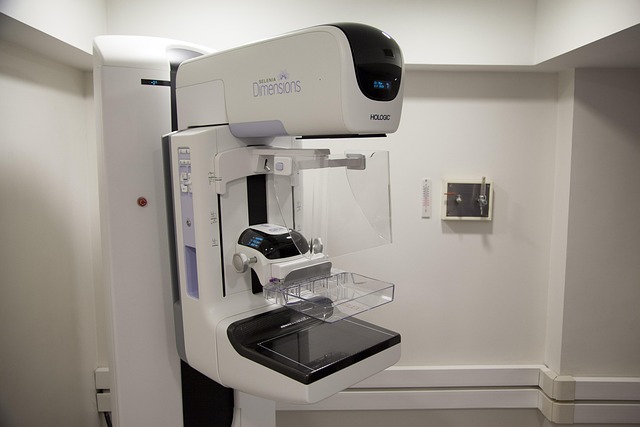
When Yvonne Cook went for a routine mammogram in Aberdeen, she didn't think twice about ticking the box to join an AI research project. That decision may have saved her life.
"I just felt incredibly lucky," Cook, who is in her 60s, told the BBC. A tiny Grade 2 tumour — too small to be detected by the human eye — was spotted by an artificial intelligence tool during the study. Without it, her cancer might not have been found for another three years.
Cook's story sits at the heart of a landmark study, published last month in Nature Cancer, that could reshape how breast cancer is detected across the UK. The research found that AI can increase breast cancer detection by 10.4 per cent and reduce healthcare workers' workload by more than 30 per cent.
The study's lead author, Dr Clarisse de Vries, is a Lecturer in Data Science at the University of Glasgow. She led the evaluation while previously based at the University of Aberdeen, working alongside NHS Grampian and medical technology firm Kheiron Medical Technologies — now part of DeepHealth Inc.
How it works
The AI tool, called Mia, was tested on mammograms from 10,889 women screened through NHS Grampian's breast cancer programme. Currently, every mammogram in the UK is read by two radiologists — yet approximately one in five cancers is still missed.
Mia was evaluated across 17 different workflow scenarios. The best results came from using AI as both a second reader — replacing one of the two human radiologists — and as an additional safety net.
The findings were striking. Not only were more cancers caught, most of them invasive and high grade, but the time to notify women dropped from 14 days to just three. Fewer women were called back for unnecessary biopsies, reducing both patient anxiety and NHS costs.
"This is why our findings are so important," said Dr de Vries. "Not only did we find optimal ways to detect breast cancer, quicker and more accurately, we also found ways to reduce the number of women having to return for unnecessary tests."
An overstretched system
The study arrives at a critical moment. More than two million mammograms are performed in the UK each year, and radiologist shortages are placing increasing strain on screening services.
Professor Gerald Lip, Clinical Director for breast screening in North East Scotland at NHS Grampian, was emphatic about the implications.
"The bottom line here is — without AI, doctors would not have caught these cancers as early," he said. "Our results show that AI could effectively support breast screening services by increasing cancer detection and reducing doctors' workload."
For radiologists facing burnout, the potential 30 per cent workload reduction is not a luxury — it is a lifeline.
What comes next
The study directly supports the upcoming EDITH trial, which will expand the evaluation of AI in breast screening to sites across the UK. The Scottish element will be led jointly by the University of Aberdeen, NHS Grampian, and the University of Glasgow — putting Glasgow researchers at the centre of what could become a national transformation in cancer care.
Professor Mike Lewis, NIHR Scientific Director for Innovation, said the study demonstrated "exactly the kind of innovation we want to see delivering tangible improvements across the health system."
The UK National Screening Committee does not yet recommend AI in breast screening, citing gaps in the evidence base. This study — the first comprehensive UK evaluation of its kind — is designed to start closing those gaps.
A patient's perspective
For Yvonne Cook, the statistics are deeply personal. Had the AI not flagged her tumour, she might have faced a far more invasive treatment — or worse.
"If that had been the scenario, then it's likely that the surgery would have been more invasive," she told the BBC. "The cancer could have spread. It could have involved chemotherapy and a much longer recovery time."
Her message is simple: embrace the technology. The evidence suggests it could save your life.