For as long as recording studios have existed, engineers have faced a painful choice: the irreplaceable warmth and depth of an analogue mixing console, or the convenience and speed of digital recall. Choose analogue, and you accept the ritual of recall sheets — meticulously photographing or noting the position of every knob, fader, and switch before a session ends, then spending hours manually resetting them when the client returns for revisions.
Choose digital, and you gain instant recall at the cost of something harder to define but impossible to ignore — that analogue character that has shaped the sound of recorded music for over half a century.
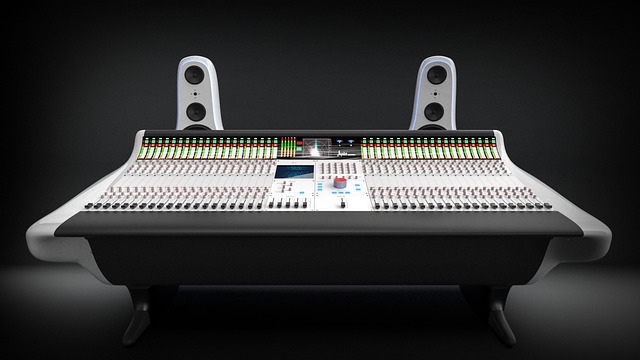
Solid State Logic believes you no longer have to choose. The Oxford-based company's new Oracle console, which won the 2026 TEC Award for Large Format Console after its debut at NAMM in January, delivers what engineers have dreamed of since the 1970s: a fully analogue mixing console with instant, complete recall of every setting.
The technology that changes everything
At the heart of Oracle is SSL's proprietary ActiveAnalogue technology — a system that digitally controls analogue circuitry without ever converting the audio signal to digital. Every parameter on the console — gain, EQ, pan, routing, insert points, bus assignments — can be saved and recalled at the touch of a button.
According to Sound on Sound's Matt Houghton, who spent several hours with the console at SSL's Oxfordshire headquarters, a full session loads in just three to four seconds — "quicker than the loading time for a typical DAW project."
The implications for studio workflow are profound. An engineer can mix a rock band in the morning, recall a film score session after lunch, and return to the rock mix before the end of the day — all without touching a recall sheet. For commercial studios charging by the hour, the time saved translates directly to revenue and creative freedom.
A vision forty years in the making
The Oracle's roots stretch back further than most realise. SSL founder Colin Sanders outlined his vision for digitally controlled analogue consoles in a 1985 booklet, The Future of Audio Console Design. At the time, the technology wasn't commercially viable. Four decades of advances in manufacturing and component design have finally made it possible.
Designer Niall Feldman, whose original concept shaped the Oracle, has created a console that channels the DNA of SSL's legendary E, G, and J/K Series desks while pushing the company's sonic signature into new territory. The console features next-generation PureDrive mic preamps with 75dB of gain and a dedicated Drive control for harmonic saturation, alongside the iconic "242 Black Knob" four-band parametric EQ with switchable E and G Series curves.
Available in 24 and 48-channel configurations — scaling up to 112 inputs at mixdown — the Oracle packs large-format capability into a compact footprint roughly the size of SSL's AWS desk. All analogue circuitry is housed in remote 13U racks that operate below NR25, keeping the control room whisper-quiet.
Industry validation
The response from the professional audio community has been emphatic. Peter Gabriel hosted the Oracle's official launch at his Real World Studios, and Houghton's Sound on Sound review concluded that SSL had done "a bloody good job of it."
The integrated THE BUS+ compressor, Dynamic EQ, Transient Expander, and comprehensive DAW integration via SSL 360 round out a feature set that positions the Oracle not merely as a mixing console, but as the centrepiece of a modern hybrid studio workflow. Support for immersive formats including Dolby Atmos ensures the console is future-proofed for evolving production demands.
The price of progress
At approximately £87,000 excluding VAT for the 24-channel configuration, the Oracle is unambiguously pitched at the professional market. But for high-end commercial studios, universities, and multi-user facilities where session efficiency and sonic quality are paramount, SSL is betting the investment pays for itself in reduced downtime and increased throughput.
Forty years after Colin Sanders first imagined it, the digitally controlled analogue console has finally arrived — and it sounds exactly like an SSL should.