
A University of Glasgow student has won one of European aerospace engineering's most coveted student honours for an extraordinary piece of work that recreated, in miniature, one of the solar system's strangest phenomena: the icy plumes that erupt from Saturn's moon Enceladus.
Simon Fraser, a fifth-year MEng student in Aeronautical Engineering, took first prize at the PEGASUS student competition at the Universitat Politècnica de València on 17 April, beating forty of the brightest aerospace Master's students from across the continent.
His winning project, An Experimental Framework to Investigate Icy Plumes on Saturn's Moon Enceladus, tackled a question that has captivated planetary scientists for nearly two decades.
What is Enceladus, and why the fuss?
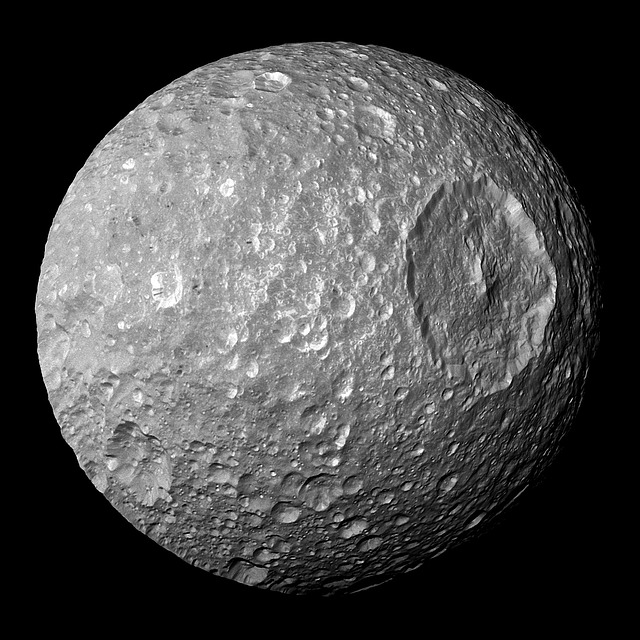
Enceladus is a small, brilliantly white moon of Saturn — barely 500 kilometres across — wrapped in a shell of ice. Beneath that shell, scientists believe, sloshes a global ocean of liquid water. Through cracks at the moon's south pole, that ocean periodically vents into space in vast plumes of ice grains and vapour, hundreds of kilometres tall.
Those plumes matter enormously. They give researchers a rare chance to "taste" the contents of an alien ocean without ever drilling through the ice. NASA's Cassini spacecraft, which flew through them, found organic molecules and the chemical fingerprints of hydrothermal activity — the conditions, in short, that on Earth gave rise to life.
Recreating an alien geyser at Acre Road
Mr Fraser's task was no small thing. Working in the vacuum chamber at the University's Acre Road laboratory, and supervised by Dr Craig White, he constructed an ice-based converging-diverging nozzle — essentially a miniature rocket nozzle carved from frozen water — with a liquid reservoir at its base, to mimic the conditions thought to exist beneath Enceladus's crust.
The result was the first sustained supersonic flow ever produced in this specific configuration, complete with the emission of tiny ice grains. In experimental terms, he had built himself a working analogue of an Enceladus plume, on a tabletop, in Glasgow.
"I'm very grateful for the opportunity to attend the PEGASUS conference," Mr Fraser said. "It was a thoroughly enjoyable and insightful experience to see the work of the best European aerospace Master's students. Winning first prize was a proud moment and is one of the highlights of my time at the University of Glasgow."
He paid tribute to Dr White, postgraduate researcher Andrew Wilson, Dr Matteo Ceriotti and Dr Ian Taylor for their support throughout the project.
A Glasgow win against stiff competition
The PEGASUS partnership unites 31 of Europe's leading aerospace universities across twelve countries, between them turning out more than 3,000 aerospace engineers at Master's level each year. Each member institution sends a single representative project to the annual competition; this year forty students presented their theses.
Dr Matteo Ceriotti, the James Watt School of Engineering's PEGASUS representative, said the Glasgow selection panel had been spoilt for choice. "I am delighted that Simon won," he said. "The University of Glasgow panel had a hard time to select the best MEng project and student to represent the University; this year we had an exceptional number of Aerospace students applying to participate, and all projects were extremely good.
"Simon's project stood out for its interdisciplinarity between aerodynamics and space science, and its outstanding experimental set-up and results."
There is, by tradition, a small catch attached to victory: the winning university takes on the duty of organising the following year's competition. In this instance the 2027 event will in fact be hosted by KTH in Stockholm — a quirk of the rota — though the laurels remain firmly on Kelvinside.
For Mr Fraser, attention now turns to whatever lies beyond his MEng. On the strength of this performance, one suspects, the only ceiling will be the upper atmosphere.