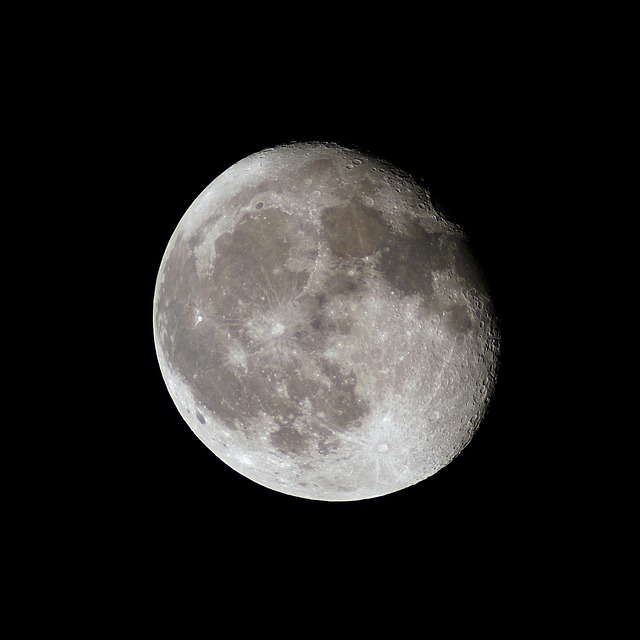
Look up at the night sky and almost everything you see — the Sun, the stars, the glowing wisps between them — is plasma. It is the fourth state of matter, the stuff that makes up an estimated 99.9% of the visible universe, and we still do not fully understand how it behaves.
Now we understand it a little better. And the breakthrough came from a neural network running on a desktop computer.
Physicists at Emory University in Atlanta have used a custom-built artificial intelligence to uncover previously unknown laws governing "dusty plasma" — an ionised gas peppered with tiny charged grains. Their findings, published in the Proceedings of the National Academy of Sciences (PNAS), describe the forces between those grains with better than 99% accuracy and, in the process, quietly correct two long-standing assumptions that textbooks had taken for granted.
"We showed that we can use AI to discover new physics," said Professor Justin Burton, the experimental physicist who co-led the work. "Our AI method is not a black box: we understand how and why it works."
What is dusty plasma, and why should we care?
Plasma is what you get when a gas is heated or charged so fiercely that its electrons break free from their atoms. Lightning is plasma. So is the solar wind. Dusty plasma simply adds a sprinkle of charged solid particles into the mix.
It sounds exotic, but it is everywhere. The rings of Saturn are dusty plasma. So is the haze that hovers above the Moon's surface — the reason the Apollo astronauts came home with grey suits. On Earth, wildfires can produce it when soot particles pick up a charge in the smoke and start interfering with firefighters' radios.
For decades, physicists have used dusty plasma in the lab as a kind of slowed-down model of how large groups of particles behave together. The particles are big enough to film, the timescales are slow enough to follow, and the maths is messy enough to be interesting.
Two boats on a lake
Inside Burton's lab, tiny plastic spheres are suspended in a vacuum chamber filled with plasma. A sheet of green laser light scans up and down while a high-speed camera takes the snapshots. Stitched together, the images give a three-dimensional record of every particle's path over several minutes.
Feed enough of those trajectories into a properly designed neural network and, the team found, the AI starts to infer the rules the particles are following.
The trickiest of those rules involve so-called non-reciprocal forces — pushes and pulls that are not symmetrical between two particles. The researchers compare them to two boats crossing a lake. Each boat's wake disturbs the other, but the effect on the leader is not the same as the effect on the follower.
"In a dusty plasma, we described how a leading particle attracts the trailing particle, but the trailing particle always repels the leading one," explained co-senior author Professor Ilya Nemenman. "This phenomenon was expected by some, but now we have a precise approximation for it which didn't exist previously."
Where the textbooks were wrong
Two assumptions in particular did not survive contact with the AI. The first was that the electric charge stuck to a dust particle scales in exact proportion to its radius. The new work shows the relationship is more complicated, and depends on the temperature and density of the surrounding plasma.
The second was that the way forces fade with distance is independent of particle size. Wrong, the model says. Size matters. Lab experiments backed up both corrections.
Genuinely new — not just faster
What makes the paper unusual is not the use of AI. It is the kind of use. Most machine learning in science crunches data or speeds up predictions. This one was asked to find a law of nature, and did.
"For all the talk about how AI is revolutionising science, there are very few examples where something fundamentally new has been found directly by an AI system," Nemenman said.
The team — including first author Wentao Yu, now at Caltech, and Eslam Abdelaleem, now at Georgia Tech — argue their framework is universal. The same approach could in principle be turned on paint, ink, or even clusters of cells in the body. Nemenman is already eyeing how cancer cells coordinate as they break away from a tumour.
The work was funded by the National Science Foundation and the Simons Foundation. No supercomputer required.