

Edition No. 74 · Tuesday, April 28, 2026

← Past Editions · Edition No. 74 · Tuesday, April 28, 2026

Today’s outlook: Peacekeeper cells, quantum quirks and a streaming box that's punching well above its postcode

The 'peacekeeper' cells that could transform transplant medicine
Health

The 'peacekeeper' cells that could transform transplant medicine

A Nobel-winning discovery is heading from the laboratory to the clinic, with US regulators tipped to approve the first regulatory T cell therapy as early as this year.

For thousands of people who have endured a bone marrow transplant, the relief of beating leukaemia or another blood cancer can be undercut by a brutal complication: graft-versus-host disease, or GvHD. The donor's immune cells, transplanted to rebuild the patient's bone marrow, can turn on their new host — attacking skin, gut, liver and lungs.

Around half of donor stem-cell transplant recipients go on to develop some form of GvHD, according to the UK blood cancer charity Anthony Nolan. For some it is mild and manageable. For others it is life-changing, and sometimes fatal.

Now, Scientific American reports that hope may be on the way. The US Food and Drug Administration could approve the first regulatory T cell therapy as soon as spring 2026 — a treatment designed to prevent GvHD before it begins.

Read full story →


A new state of matter, born where physics couldn't make up its mind
Science

A new state of matter, born where physics couldn't make up its mind

International team finds quantum criticality and topology can coexist in CeRu₄Sn₆ — opening a fresh path to durable quantum computers and ultra-sensitive devices

Somewhere in a Vienna laboratory, cooled to within a whisker of absolute zero, a small lump of cerium, ruthenium and tin has just done something it was not supposed to be able to do.

It has refused to behave like a normal piece of matter — and in doing so, it has handed physicists a brand new state of the universe to play with.

The discovery, published in Nature Physics and announced jointly by Rice University in Texas and TU Wien in Austria, describes a material called CeRu₄Sn₆ that bridges two corners of quantum physics that were, until now, thought to be incompatible. The team is calling it an "emergent topological semimetal", and the implications stretch from quantum computing to a new generation of sensors.

Read full story →
BUZZCUT 2026: Glasgow's Southside became the UK's radical performance capital for four electric days
What's On Glasgow

BUZZCUT 2026: Glasgow's Southside became the UK's radical performance capital for four electric days

Scotland's boldest celebration of experimental performance has just wrapped — and if you missed it, the only thing to do now is pencil in 2027

For four electric days in April, Glasgow's Southside became the radical performance capital of the UK. BUZZCUT 2026 — the festival that long ago stopped asking permission — gathered 26 artists and collectives across Tramway, Strangefield and Glad Café, and the city is still talking about it.

Running Wednesday 15 to Saturday 18 April, this year's edition kept faith with the festival's pay-what-you-can ethos. General admission started from a guideline £7 per performance, with a sliding-scale guide on the BUZZCUT website helping audiences pay what they could afford.

Three venues, three vibes: Tramway on Albert Drive provided the scale (and a designated quiet space on festival days); the artist-led Strangefield offered DIY intimacy; and Glad Café on Pollokshaws Road brought late-night cabaret energy. All three venues are wheelchair accessible, although organisers flagged a temporary lift outage at Strangefield mid-festival that briefly affected access to the upper galleries. The festival is strictly 18+.

Read full story →
Cranborne Audio's Brick Lane MC4: a very British rethink of analogue dynamics
Audio Equipment

Cranborne Audio's Brick Lane MC4: a very British rethink of analogue dynamics

The UK boutique's NAMM 2026 headliner pulls off lookahead limiting without an A-D converter in sight — bolted to a four-channel mastering-grade chassis at £2,699.

For decades, "lookahead" has been a digital trick. That brief peek into the future that lets a limiter clamp a transient before it arrives has historically required your audio to detour through analogue-to-digital conversion, sit in a sample buffer, and convert back again. Cranborne Audio reckon they have cracked it without ever leaving the analogue domain — and the Brick Lane MC4, unveiled at NAMM 2026, is the box that proves it.

If the name rings a bell, it should. The British firm previewed the underlying technology last year in their 500-series Brick Lane PWM Modal Compressor. The MC4 is the rackmount, four-channel, mastering-grade incarnation that the audio press has been quietly waiting for.

Lookahead is brilliantly simple in concept and a nuisance in practice. By delaying the audio path slightly behind the detector, a limiter sees the peak coming and reacts with effectively zero attack time — no overshoots, no clipped transients, no apologetic gain pumping. Until now, doing that meant going digital, because only digital domains made it cheap and stable to hold audio in a buffer while the sidechain decided what to do.

Read full story →
Cut, lead, solder: how Glasgow's stained glass studios are pulling in a new generation
What's On Glasgow

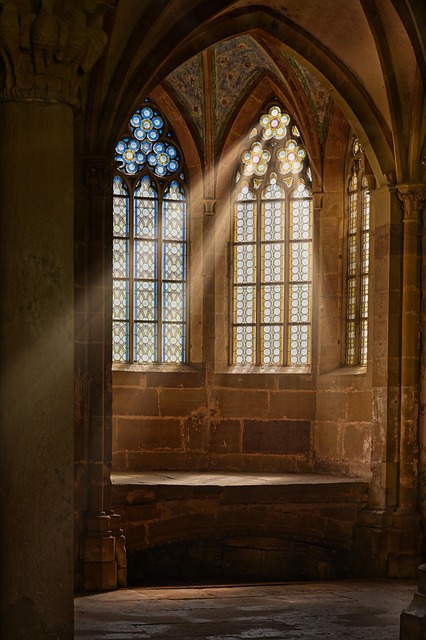
Cut, lead, solder: how Glasgow's stained glass studios are pulling in a new generation

From Dennistoun to Bridgeton, the city's century-old craft is having a youthful renaissance — and the waiting lists are growing.

There is a particular sound you only hear in a stained glass studio: the dry, papery snap of a glass cutter biting into a sheet, followed by the soft tap of a running pliers and a satisfied "there we go" from across the bench. On any given Saturday in Glasgow's East End, that sound is now competing with the kettle.

The city that gave the world Charles Rennie Mackintosh and the Glasgow Style is, more than a century on, quietly rediscovering its love of leaded glass — and the people picking up the cutters are younger than you might expect.

At RDW Glass on Fleming Street in Dennistoun, the beginners' weekend workshop has become one of the East End's harder tickets. Run by glass artist Rich Watt out of a working studio behind Duke Street, the one-day class costs £180 and sends every participant home with a small leaded panel of their own making.

Read full story →