
Edition No. 73 · Monday, April 27, 2026

← Past Editions · Edition No. 73 · Monday, April 27, 2026

Today’s outlook: Light returns to forgotten places — and the kettle's on

Light returns to Springburn's 'forgotten Eden' as Winter Gardens win £1.129m lifeline
News Glasgow

Light returns to Springburn's 'forgotten Eden' as Winter Gardens win £1.129m lifeline

Scotland's largest glasshouse, derelict since a 1983 storm, is set to reopen as a 'living ruin' after decades of community campaigning

For more than four decades, the rusting iron skeleton of Springburn Winter Gardens has stood in the middle of its north Glasgow park like a half-remembered dream — locked, leaking, and slowly succumbing to the weather that closed it in the first place.

This week, the people who refused to forget it have something to celebrate.

Glasgow City Council has confirmed £1.129m from the Scottish Government's Regeneration Capital Grant Fund to begin restoring the A-listed glasshouse, the largest of its kind in Scotland. It is the first significant public money the building has seen since a storm tore through it in 1983 and the doors were padlocked for what locals were told would be a short closure.

Read full story →

Glasgow's Big Coffee Weekend: How the City Brewed Up Scotland's Buzziest Festival Yet
What's On Glasgow

Glasgow's Big Coffee Weekend: How the City Brewed Up Scotland's Buzziest Festival Yet

The sold-out Glasgow Coffee Festival packed The Briggait — and spilled into the Clydeside Halls — for two heady days of cuppings, competitions and the country's finest roasters.

If you couldn't get a ticket, you weren't alone. The Glasgow Coffee Festival 2026 sold out weeks before its 18 and 19 April weekend at The Briggait, and the waiting list is still being worked through.

For its twelfth year, Scotland's biggest specialty coffee party expanded beyond its beloved Merchant City home, spilling into the neighbouring Clydeside Halls to welcome around 2,800 visitors across the weekend.

That meant more than 50 stalls of roasters, cafés and brewing innovators — plus free tastings, talks, hands-on workshops and the kind of caffeine high that needs its own warning label.

Read full story →
A new kind of painkiller: how suzetrigine could ease pain without the addiction risk
Health

A new kind of painkiller: how suzetrigine could ease pain without the addiction risk

The first new class of pain medicine in over 25 years blocks signals before they reach the brain — and UK patients could be next in line

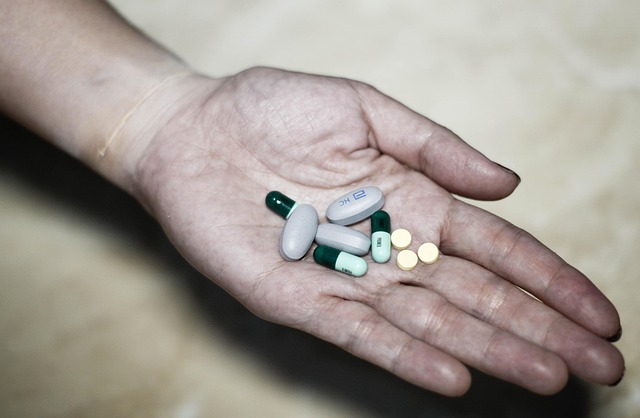
For the 80 million Americans prescribed something for moderate-to-severe acute pain each year, the choice has long been a stark one: tough it out, or risk an opioid. A new drug called suzetrigine — sold under the brand name Journavx — is offering a third path.

Approved by the US Food and Drug Administration on 30 January 2025, suzetrigine is the first painkiller in a genuinely new class to reach patients in more than a quarter of a century. Crucially, it appears to ease pain without the addictive pull that has fuelled one of the worst public health crises of modern times.

Now attention is turning to whether and when British patients will be able to access it — and a newly streamlined UK approvals process could mean sooner than many expect.

Read full story →
Graphene Defies a Fundamental Law of Physics, Bangalore Team Reports
Science

Graphene Defies a Fundamental Law of Physics, Bangalore Team Reports

In ultra-clean sheets of carbon a single atom thick, electrons have been caught behaving like a near-perfect liquid — and breaking a 170-year-old textbook rule along the way.

Imagine pouring a glass of water that flows more smoothly than anything you have ever seen — and which, while it's at it, quietly tears up a page of the physics textbook. That, more or less, is what a team of physicists in Bangalore say they have just done with electrons.

Researchers at the Indian Institute of Science (IISc), working with collaborators at Japan's National Institute for Materials Science, have reported that electrons inside exceptionally clean sheets of graphene stop behaving like ordinary particles and instead flow together as a near-frictionless liquid. The work, published in Nature Physics, appears to break one of the oldest rules in the physics rulebook.

The rule is the Wiedemann-Franz law, first set down in 1853. In plain English, it says that any decent metal that is good at conducting electricity should be roughly equally good at conducting heat. Copper wires get warm for a reason: charge and heat travel together.

Read full story →
Tiny molecular 'barcodes' could help scientists catch Alzheimer's before symptoms start
Science

Tiny molecular 'barcodes' could help scientists catch Alzheimer's before symptoms start

A new technique developed at the University of Illinois maps thousands of brain connections at once — and may one day pinpoint where neurodegenerative disease begins.

Imagine being able to spot the very first faulty wire in the brain — the loose connection that, years later, might unravel into Alzheimer's disease. A team of scientists in Illinois has just taken a meaningful step towards exactly that.

Researchers at the University of Illinois Urbana-Champaign have developed a technique that maps the connections between thousands of brain cells at once, with enough precision to see where individual neurons meet. The work, published in Nature Methods, could give doctors and drug developers a much sharper picture of what goes wrong in conditions such as Alzheimer's, Parkinson's and a range of psychiatric disorders — potentially long before a patient notices anything is amiss.

The trick involves giving each brain cell its own molecular label, a little like the barcode on a tin of soup. These labels are made from RNA, the same family of molecules that ferries genetic instructions around our cells. Specialised proteins carry the RNA barcodes from the body of the neuron out to the synapse — the tiny junction where one brain cell hands a signal to the next. When two neurons meet, their barcodes meet too. The researchers snip out those junctions, read the barcodes using high-speed genetic sequencing, and work out exactly which cells were talking to which.

Read full story →